
Pixel Synth: How it Started
My iOS "art/music box" project

Pixel Synth has been my “secret” side project over the last six months. I have been hesitant to publicly share this idea because, to be honest, I have no idea if I’ll be able to pull it off. Before starting this endeavor I had virtually zero coding experience and learning to code has been one of those most challenging things I’ve ever attempted. I still have no idea when/if it will be done but I’d like to share with you the concept and progress I’ve made so far.
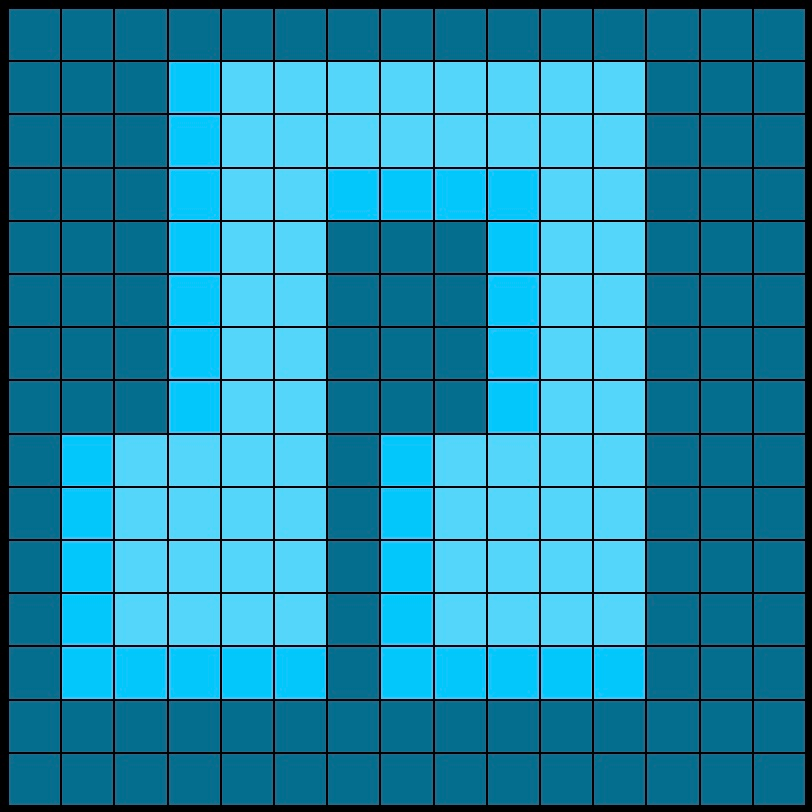
What is Pixel Synth? It is a “art/music box” that uses pixel art to generate sound. I’m not entirely sure where I got the idea but I have always been fascinated with Chromesthesia (which is a type of synesthesia in which sound involuntarily evokes an experience of color, shape, and movement). I personally don’t experience it but I do associate colors with sounds and music in my work. (My Simple Drum Samples Color Pack is a perfect example of this)
Pixel Synth will be a “gateway” app into music production. There will be a stand-alone version where you can experience creating the artwork/sound scape as well as an AUV3 plug-in to use your artwork/synth engines within a DAW or music production app.
Designing something for beginners and professionals is challenging but it was a part of the vision of SDS-x and I hope to continue to blur the lines of creativity with Pixel Synth.
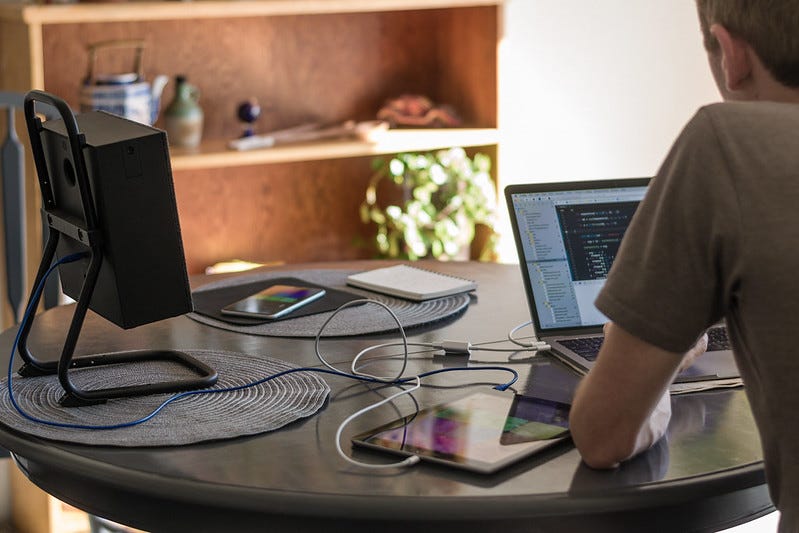
Let me take you back a little bit to see exactly how and why I started learning to code for Pixel Synth. A few years ago I started a sample website for worship drummers called Simple Drum Samples and my goal was to make electronic drum samples more accessible. A few months after starting the site a had a conversation with my friend Kurtis (founder of Lambertones) about this idea of an app to play my drum samples and he introduced me to Ryan, the developer of AutoPad.
Ryan was excited about the idea and surprisingly already had a shell drum pad player that he was able to import my sounds into. He asked for a feature list and UI (user interface) mock-up and that is how SDS-x began. Fast-forward to later that year and we released SDS-x only one year after I started simpledrumsamples.com!
That was December 2019… and we all know how 2020 went! Over the next couple years met online regularly and did a major update on the app. Obviously I am leaving out a ton of details but I’m sure they will appear in a future newsletter.
Anyways it was over those regular meetings with Ryan that we would talk about what we were working on where I kept pitching him different app ideas. One idea I kept coming back to was Pixel Synth and after brining it up multiple weeks in a row Ryan said to me, “Have you ever thought of learning to code?”
I had thought about learning to code before but usually avoid the thought because I had zero experience and absolutely no idea where to start. However, something about that day with Ryan’s guidance and having already dipped my toes in the development process with SDS-x made me not only consider it but dive in head-first.
Ryan directed me towards learning coding fundamentals through JavaScript using The Coding Train YouTube channel and p5js.org which I highly recommend for anyone wanting to learn what coding is all about.
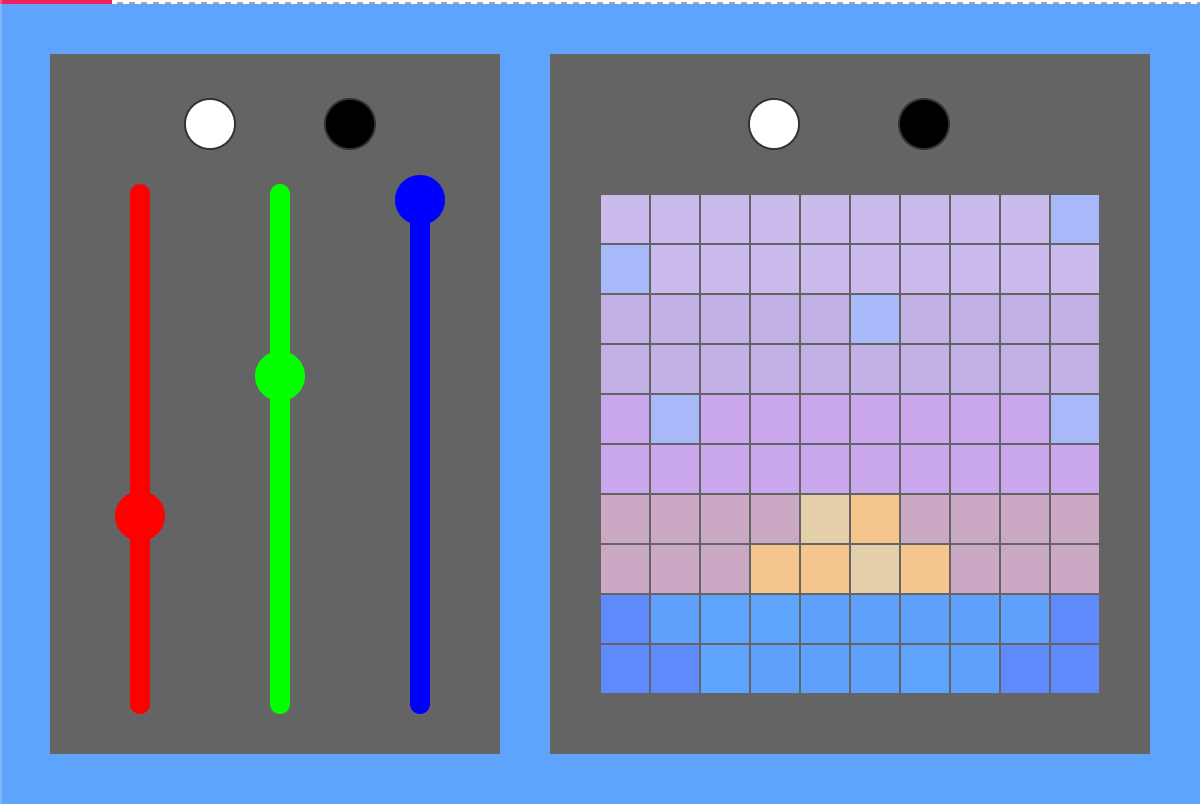
Through that process I set a milestone goal for myself — make a pixel art board maker before moving on to any Swift (the language I would eventually use to code my Apple app). After a few weeks of binging The Coding Train and applying what I learned to this project I made my 10 by 10 pixel art board editor.
Once I had this editor up and running I jumped into learning Swift through the Swift Playgrounds app for iPad and watching a lot of YouTube. After a few weeks of that and finally getting my long awaited M1 MacBook Pro (upgraded from a 2011 MBP!) I downloaded Xcode and started writing some “actual code” for Pixel Synth.
Thanks to YouTube channels like Paul Hudson and Swiftful Thinking I was able to make significant progress in a fairly short amount of time. Using SwiftUI and AudioKit I had a working demo that could make sound and animate through 24 frames. Thinking back on it now it is crazy that I was able to get as far as I did in only a few months time. Here is a screen shot of my original attempt at Pixel Synth…
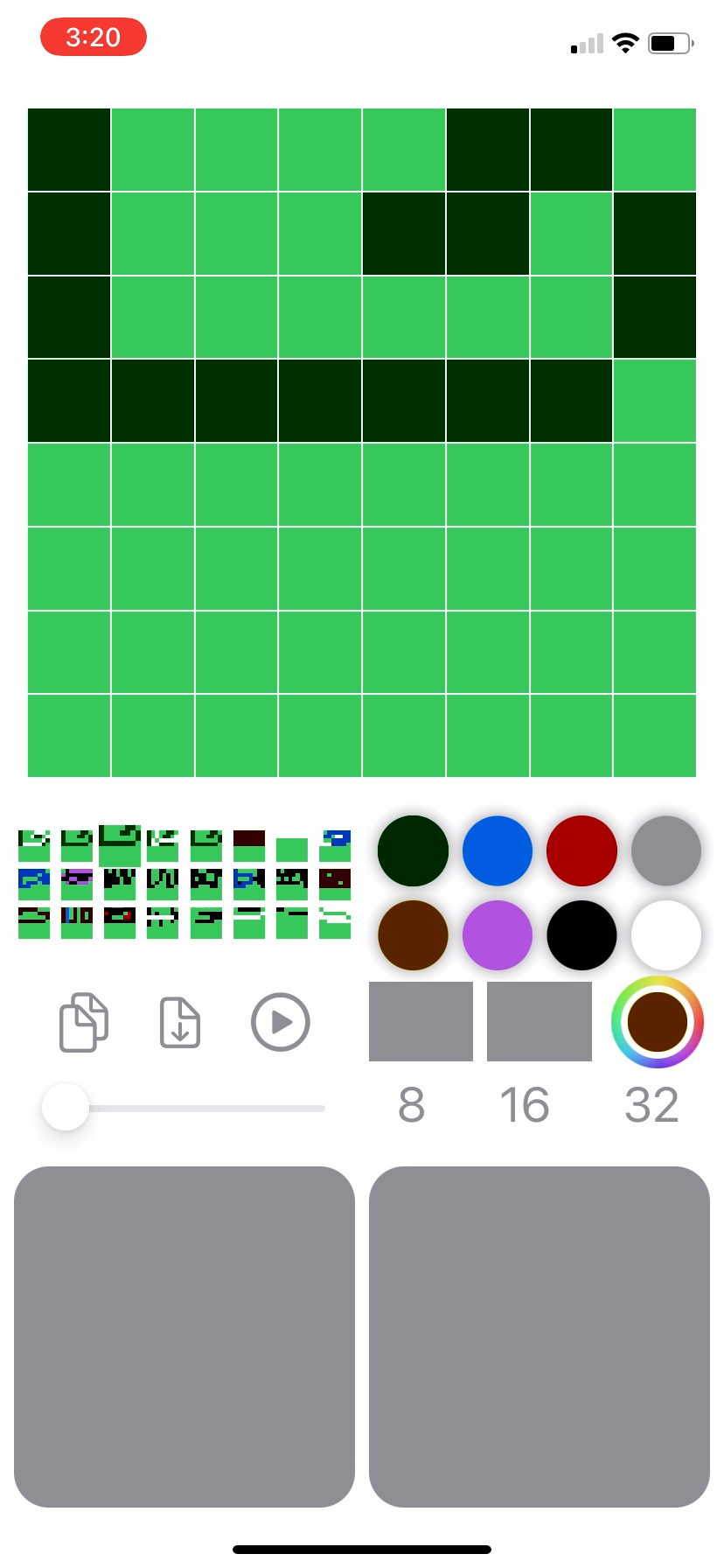
My prototype app has a pixel art-board that uses the color information to generate a synth engine using AudioKit, 24 frames to draw/select (small boxes on the middle left of the screen shot), copy/paste ability, play toggle button, rounded corner slider for dot-matrix style, 8 color adjustable color palate circles (that also set ADSR and change other synth parameters), a system color picker, resizable grid (8, 16, or 32) and two XY pads to play the sound.
I made and learned so much in such a short amount of time that I never really thought about exactly what I was making… until I hit a major hurdle. The grid and most of the app worked well but when it was on the 32x32 option I had some major CPU spikes and performance issues. After a lot of troubleshooting I discovered that the entire UI was redrawing itself when anything updated on the app… which at that size is 1024 rectangles (plus all the other elements on the screen).
There might have been a way to fix the performance issue in the code but, as a beginner, I could not figure it out. After weeks of researching and racking my brain I ultimately decided to start from scratch on the grid. With the knowledge and practice of my first attempt making my second grid didn’t take too long and I had a better functioning art board. This new grid is limited to 24x24 in size but has some built in animation, is variable in size (1x1, 2x2, 3x3, etc.), and has made me re-think some of the other UX/UI (user experience/user interface).
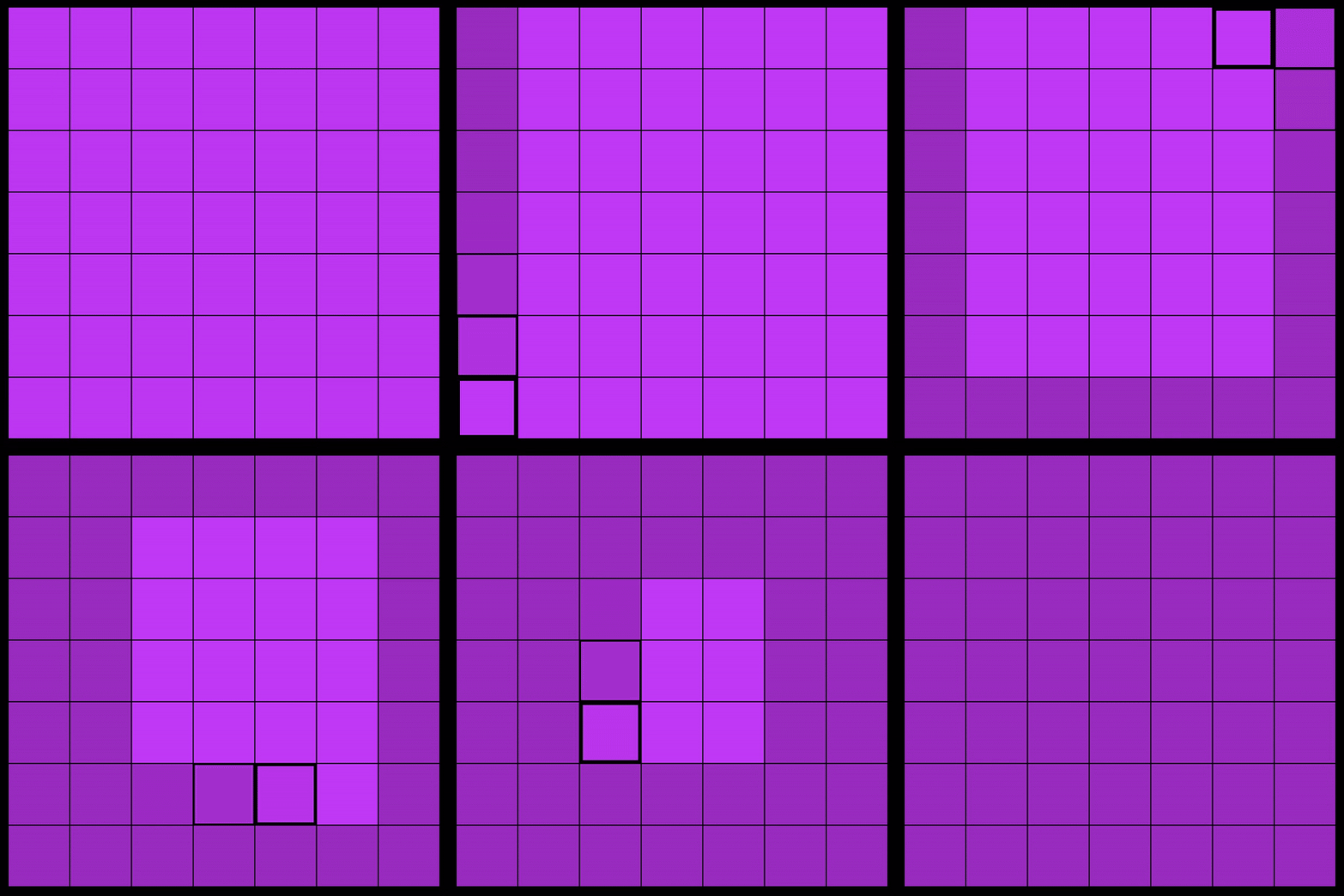
Pixel Synth is about exploring and making art and sound. I want to inspire others to create, not just consume, and this app is just part of that process. My journey with coding and creating musical tools/toys is just starting. I hope you follow along and join me in the process.
Thanks, Corey! I really like reading about your journey. Nice job tackling the writing! I know it’s not your favorite.